Buying Guides
Bathing Water Quality Classification: 32 Beaches Rated Poor
By the Carefree Retreat team
Updated 2026
If your retreat promises a morning sea swim or a dip in the river, the bathing water quality classification for that spot is the one number worth checking before you book. The Environment Agency grades every designated bathing water in England as Excellent, Good, Sufficient or Poor, and the latest ratings, published on 25 November 2025, put 32 sites in the Poor category. That is down from 37 the year before, but it still means one designated swimming spot in fourteen carries an official advice against bathing. Here is what each grade means, what it does not tell you, and how to look up a specific beach or river in about two minutes.
The 2025 ratings in numbers
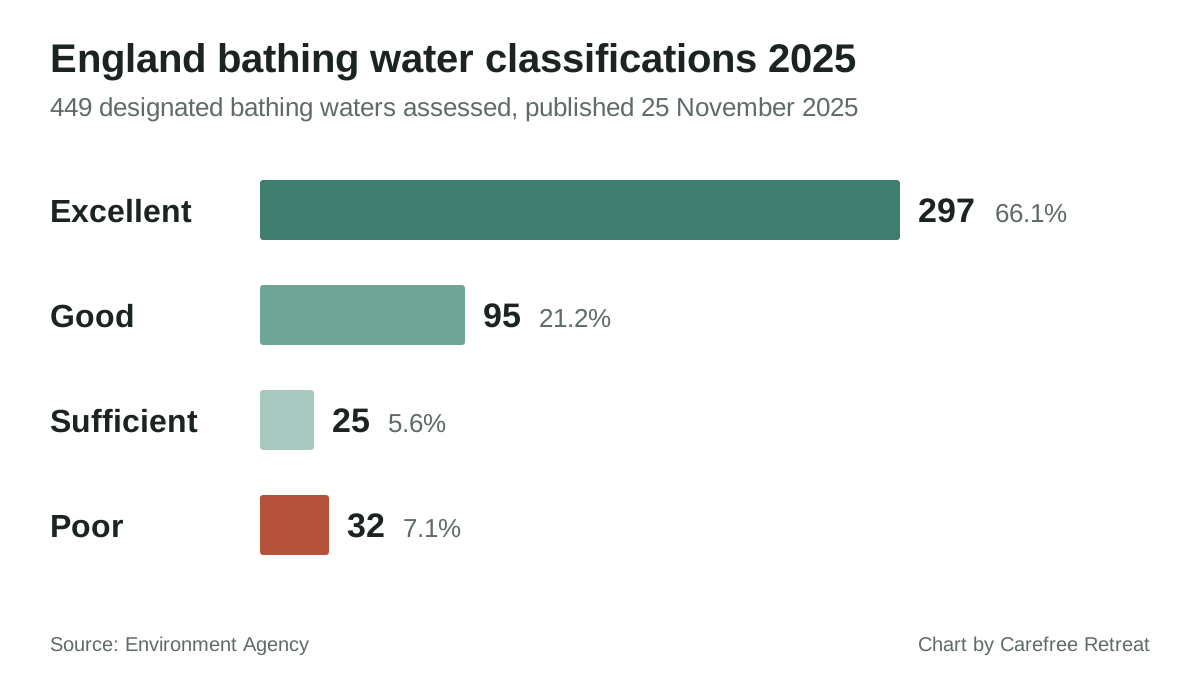
The Environment Agency assessed 449 of England’s 451 designated bathing waters in 2025; two could not be assessed because of access problems. According to its summary of the 2025 classifications:
| Classification | Bathing waters | Share |
|---|---|---|
| Excellent | 297 | 66.1% |
| Good | 95 | 21.2% |
| Sufficient | 25 | 5.6% |
| Poor | 32 | 7.1% |
So 417 sites (92.9%) met at least the minimum standard, up from 91.8% in 2024, and 297 rated Excellent, the highest number since the current standards came in in 2015. A largely dry summer from May to August helped, because rain washes pollution off farmland and triggers sewer overflows.
The figure that matters most for retreat-goers is hidden in the detail. Of the 34 bathing waters designated since 2021, 19 were rated Poor, including 17 of the 27 added in 2024. Most of the recent additions are rivers and lakes, often near the kind of rural venues that run wild swimming retreats. A newly designated river spot is far more likely to be Poor than a long-established beach.
What the four grades mean
Each classification is worked out from up to 20 water samples taken each season over the previous four years, tested for two bacteria that indicate sewage or animal waste: E. coli and intestinal enterococci. The Excellent and Good standards use the 95th percentile of the results, and Sufficient uses the less strict 90th percentile. Inland waters are allowed roughly double the bacteria count of coastal ones at each grade.
- Excellent. The cleanest, most consistent results. The best choice for a swim most days of the season.
- Good. Generally good quality, with occasional higher readings, often after heavy rain.
- Sufficient. Meets the minimum legal standard. Short-term pollution is more frequent.
- Poor. Fails the minimum standard. The site must display advice against bathing for the whole of the next season, though swimming is not banned.
What a classification does not tell you
A grade is a four-year average. It says nothing about the water on the day you arrive. A site rated Excellent can still be polluted for a day or two after a summer storm, when sewer overflows and run-off from fields peak.
Three other limits worth knowing:
- Only designated sites are graded. Most of England’s rivers and lakes, and plenty of coves, are not designated bathing waters at all, so they have no classification and no regular testing. No rating does not mean clean; it means unknown.
- Testing happens in the bathing season. Sampling runs from May to September. A retreat offering cold-water dips in November is swimming in water nobody is routinely checking.
- The grade lags. The 2025 ratings use samples from 2022 to 2025. Improvements or new problems take years to show up fully.
How to check a specific beach or river before you book
- Look up the bathing water profile. The Environment Agency’s Swimfo service lets you search by name or on a map. Each profile shows the current classification, the history of past years, every sample result from this season, and the known pollution sources nearby.
- Check for a pollution risk forecast. At some sites, the Environment Agency issues daily pollution risk warnings during the season when rain makes short-term pollution likely. These show on the profile page and on signs at the beach.
- Look at sewer overflow alerts. Water companies publish near-real-time storm overflow maps, and the charity Surfers Against Sewage runs a free Safer Seas and Rivers alert service that covers many beaches and some rivers outside the bathing season too.
- Ask the retreat. A good venue that builds sea or river swimming into its programme should know the classification of its spot and have a rule about not swimming after heavy rain. If the answer is vague, plan to swim in the pool or skip the dip.
The rule changes since November 2025
New regulations came into force on 21 November 2025. Two changes affect swimmers directly:
- Poor sites no longer lose their status automatically. Under the old rules, a bathing water rated Poor five years in a row was de-designated, which meant testing and signs stopped. Now ministers decide case by case, so long-running problem sites can stay monitored while they are cleaned up.
- Testing dates are more flexible. Monitoring can be timed to match when people actually swim at a site, rather than fixed calendar dates.
A third change, which came into force on 15 May 2026, changes the criteria for designating new sites, including whether the water can realistically be brought up to at least Sufficient. The government has also said the definition of a bather will widen to cover water sports such as paddleboarding and surfing.
What this means when you choose a retreat
For a retreat built around the sea, an Excellent or Good beach is the reasonable minimum. For a wild swimming retreat on a river or lake, check whether the spot is designated at all, and treat a recently designated river with a Poor rating as a reason to ask hard questions. Wherever you swim, the simplest rule is a common one among open water swimmers: stay out for 48 hours after heavy rain.
If cold water is the point of your trip rather than the sea itself, a venue with a cold plunge pool gives you the same jolt with none of the water quality risk. Our outdoor spa round-up lists clifftop and lakeside pools, the sauna and cold plunge planner helps you time rounds safely, and our UK yoga retreats page covers the coastal and country venues worth booking. If you are heading to the south-west, see our page on spa days in Cornwall.
New classifications are published each November, after the season’s sampling is complete. We will update this page when the 2026 results are out.
Frequently asked questions
What are the bathing water quality classifications in England? Excellent, Good, Sufficient and Poor. They are set by the Environment Agency from four years of samples tested for E. coli and intestinal enterococci, two bacteria that indicate sewage or animal waste.
How many bathing waters were rated Poor in 2025? 32 of the 449 assessed, or 7.1%, down from 37 in 2024. 297 were Excellent, 95 Good and 25 Sufficient.
Can you swim at a beach rated Poor? Swimming is not banned, but the site must display advice against bathing for the following season. The risk of picking up a stomach bug or an ear, eye or skin infection is higher.
How do I check the water quality at a beach today? Look up the site on the Environment Agency’s Swimfo service for the latest sample results and any pollution risk forecast, and check the water company’s storm overflow map or a sewage alert service before you go in.
When are bathing water classifications published? Every November, after the May to September sampling season. The 2025 ratings were published on 25 November 2025.
Are rivers tested like beaches? Only rivers and lakes that are designated bathing waters. Most inland swimming spots are not designated, so they have no regular testing and no classification.
Found a place we’ve missed? Tell us about it.
Back to top