Buying Guides
Hot Tub Running Cost UK: 79p to £2.11 a Day This Winter
By the Carefree Retreat team
Updated 2026
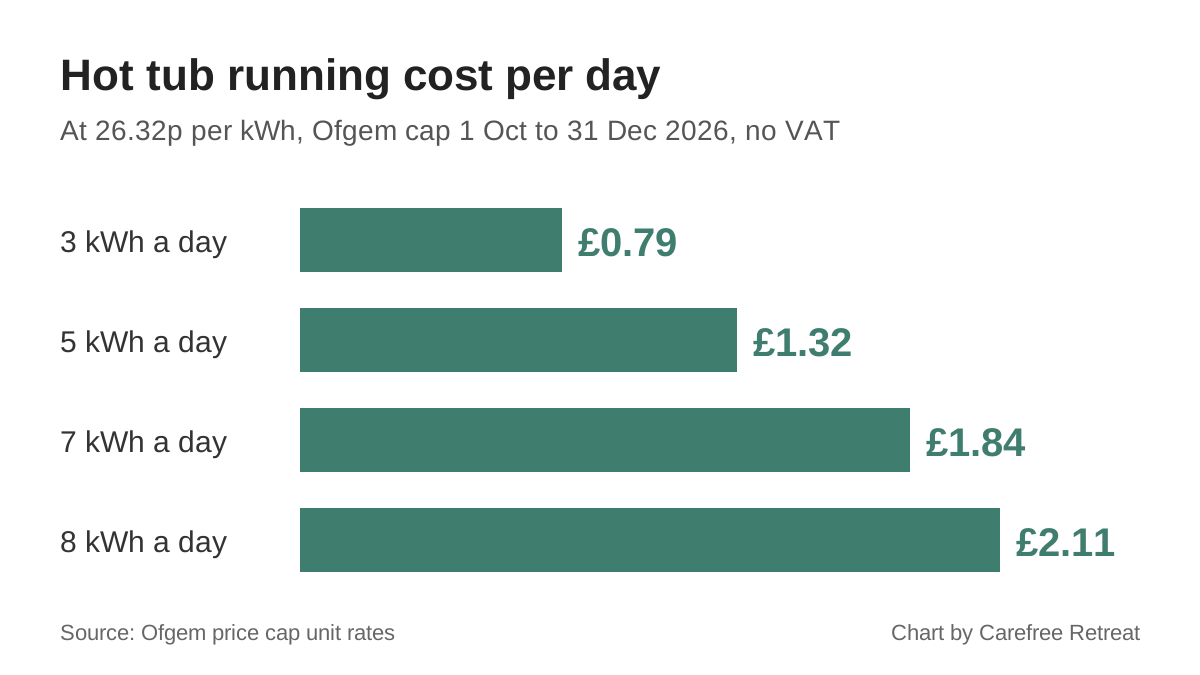
The hot tub running cost in the UK comes down to one sum: the kilowatt hours your tub uses a day, multiplied by your electricity unit rate. At the Ofgem price cap for 1 October to 31 December 2026, the average direct debit unit rate is 26.32p per kWh, and a hot tub using 3 to 8 kWh a day costs 79p to £2.11 a day, or roughly £24 to £63 a month.
That rate is lower than it would otherwise be because there is no VAT on household electricity in Great Britain from 1 October 2026 to 31 March 2027. Below are the figures for the main types of tub, what the first fill costs, and what actually moves the bill.
The price cap figures we used
From Ofgem’s energy price cap unit rates page, checked 8 October 2026:
| Electricity, direct debit, GB average | 1 Jul to 30 Sep 2026 | 1 Oct to 31 Dec 2026 |
|---|---|---|
| Unit rate | 26.11p per kWh | 26.32p per kWh |
| Daily standing charge | 57.19p | 54.83p |
| VAT included | 5% | None |
The overall cap for a typical dual fuel household is £1,723 a year, up 4% on the previous quarter. Your own rate depends on your region and payment method, and the cap does not apply if you are on a fixed tariff, so check your bill and swap in your own figure.
We have left the standing charge out of the hot tub sums. You pay it whether or not the tub is plugged in, so it is not a cost of running one.
What a hot tub costs a day, month and year
| Energy use | Per day | Per month (30 days) | Per year |
|---|---|---|---|
| 3 kWh a day | £0.79 | £23.69 | £288 |
| 5 kWh a day | £1.32 | £39.48 | £480 |
| 7 kWh a day | £1.84 | £55.27 | £672 |
| 8 kWh a day | £2.11 | £63.17 | £769 |
All at 26.32p per kWh. The yearly column assumes the rate held all year, which it will not: the cap changes every quarter, and VAT on electricity is due to return on 1 April 2027.
Where does your tub sit? Hot tub makers and dealers put a typical modern tub at 3 to 7 kWh a day. Hydropool, which manufactures hard-shell tubs, quotes that 3 to 7 kWh range for a modern UK tub. The lower end is a well-insulated hard-shell tub with a good cover in mild weather; the top end is a cold, windy winter, a lot of use, or a poorly insulated tub.
Inflatable tubs: what the Lay-Z-Spa figures say
The best published numbers for a plug-in inflatable come from Appliances Direct’s running cost table for a Lay-Z-Spa Miami AirJet (669 litres), heated to 40°C with the bubbles running 1.5 hours. It priced them at 34p per kWh. We converted its weekly costs back to kWh and repriced them at today’s 26.32p:
| Use, with a thermal cover | kWh a week | Cost a week at 26.32p |
|---|---|---|
| Weekends only, summer | 24.4 | £6.43 |
| Weekends only, winter | 34.1 | £8.98 |
| Every day, summer | 38.9 | £10.23 |
| Every day, winter | 53.7 | £14.14 |
Used every day in winter without the thermal cover, the same table works out at 84.6 kWh a week, or £22.27. That gap is the single biggest saving available on an inflatable tub.
Every day in winter with a cover comes to about 7.7 kWh a day, which is why we took the top of our daily table to 8 kWh.
13-amp and 32-amp tubs: why it matters
A 13-amp tub plugs into an ordinary outdoor socket and can draw at most about 3kW, so the heater is small. Bestway’s Lay-Z-Spa heater, for example, is rated at 2,050W and warms the water by roughly 1.2 to 2°C an hour depending on the model. On many plug-and-play tubs the heater pauses while the jets or bubbles run, so a long soak in cold weather loses heat you then pay to put back.
A 32-amp tub is wired on its own circuit from the consumer unit. Larger models can draw several kilowatts at once, running the heater and pumps together. That does not make them dearer to run: what you pay for is the heat lost, and a hard-shell tub with full foam insulation and a fitted cover loses far less than an inflatable. The cost is up front: a new circuit is notifiable electrical work under Approved Document P, so use an electrician registered with a competent person scheme.
What the first fill costs
Heating water from cold is pure physics, so it can be worked out exactly before any heat is lost:
- 669 litres (a four-person inflatable) from 10°C to 40°C needs about 23.3 kWh, or £6.14.
- 1,500 litres (a mid-size hard-shell tub) from 10°C to 38°C needs about 48.8 kWh, or £12.85.
Real figures are higher because the tub loses heat while it warms, and a 13-amp heater takes the best part of a day to get there. Filling from a hot tap cuts the electric heating, though you pay for the gas or oil that heated the water instead.
What moves the bill
- The cover. The Lay-Z-Spa figures show a winter week costing over 50% more without one. Replace a waterlogged cover; it stops insulating.
- Wind. Heat loss rises sharply on an exposed patio. A fence, hedge or screen on the windward side helps.
- Temperature setting. Heat loss is roughly proportional to the gap between the water and the air. On a 5°C day, running at 38°C rather than 40°C cuts that gap from 35 to 33 degrees, about 6% less heat to replace.
- Turning it off and on. For a tub used several times a week, keeping it at temperature is usually cheaper than reheating from cold each time, because a full reheat costs pounds, as the first-fill figures show. For a tub left unused for weeks, drain it or switch it off.
- Off-peak tariffs. On a time-of-use or Economy 7 tariff, a tub with a programmable heater can do its heating overnight at the cheaper rate. Check your rates; the cap applies an average across the day, not a single figure.
Hot tub or spa day?
At £14 a week in winter for daily use, plus chemicals, water and a cover every few years, a home tub costs more than many people expect. For an occasional soak, a twilight session at a spa or a hot tub lodge may cost less over a winter. Our guides to outdoor spas in the UK and private spa hire cover the alternatives. If you keep a tub, our hot tub chlorine calculator works out dosing by litres.
Frequently asked questions
How much does it cost to run a hot tub per day in the UK? At the October to December 2026 cap of 26.32p per kWh, a tub using 3 to 8 kWh a day costs 79p to £2.11 a day. Most modern tubs fall in the 3 to 7 kWh range.
How much does a hot tub add to my electricity bill a month? Roughly £24 to £63 a month at the current cap, depending on the tub, the weather and how often you use it. An inflatable used daily in winter with a cover sits near the top of that range.
Is there VAT on electricity for a hot tub? Not on household electricity in Great Britain between 1 October 2026 and 31 March 2027, when the rate is 0%. It is due to go back to 5% from 1 April 2027, which would add about 5% to the running cost.
Is an inflatable hot tub cheaper to run than a hard-shell one? Usually not. Inflatables cost less to buy but lose more heat through the walls and floor. A hard-shell tub with full foam insulation and a fitted cover normally uses less electricity to stay hot.
Is it cheaper to leave a hot tub on all the time? If you use it several times a week, generally yes, because reheating a full tub from cold uses 20 to 50 kWh. If it will sit unused for weeks, switch it off or drain it.
Does a 32-amp hot tub cost more to run than a 13-amp one? Not necessarily. A 32-amp tub draws more power at once, but the running cost depends on how much heat the tub loses, which comes down to insulation, cover and weather.
Sources
- Ofgem, Energy price cap unit rates and standing charges, 1 October to 31 December 2026, checked 8 October 2026.
- Appliances Direct, “How much does it cost to run a hot tub”, Lay-Z-Spa Miami AirJet running cost table at 34p per kWh.
- Hydropool UK, “Do hot tubs increase your energy bill?”, for the 3 to 7 kWh a day range.
- Bestway Lay-Z-Spa product specifications, heater rating and heating rate.
- First-fill figures are our own calculation: litres x 4.186 kJ per kg per degree x temperature rise, divided by 3,600.
Found a place we’ve missed? Tell us about it.
Back to top