Buying Guides
Luxury Spa Breaks for Couples: Britain Has One Hot Spring
By the Carefree Retreat team
Updated 2026
Search luxury spa breaks for couples and you get the same eight adjectives on forty different websites. Indulgent. Sumptuous. Award-winning. None of them tell you anything, because every hotel with a heated pool uses them.
So here is a different approach. Five things about a spa break are objectively checkable before you book, they are the things that actually separate a great two nights from an expensive one, and almost nobody checks them. Below, the five questions, then six British spas that answer at least one of them in a way nowhere else can, every detail taken from what each place publishes itself.
Question 1: is the water actually special, or just heated?
This is the one that matters most and the one nobody asks. In almost every British spa the water is tap water that has been heated, filtered and chlorinated. That is fine. It is not a mineral spring.
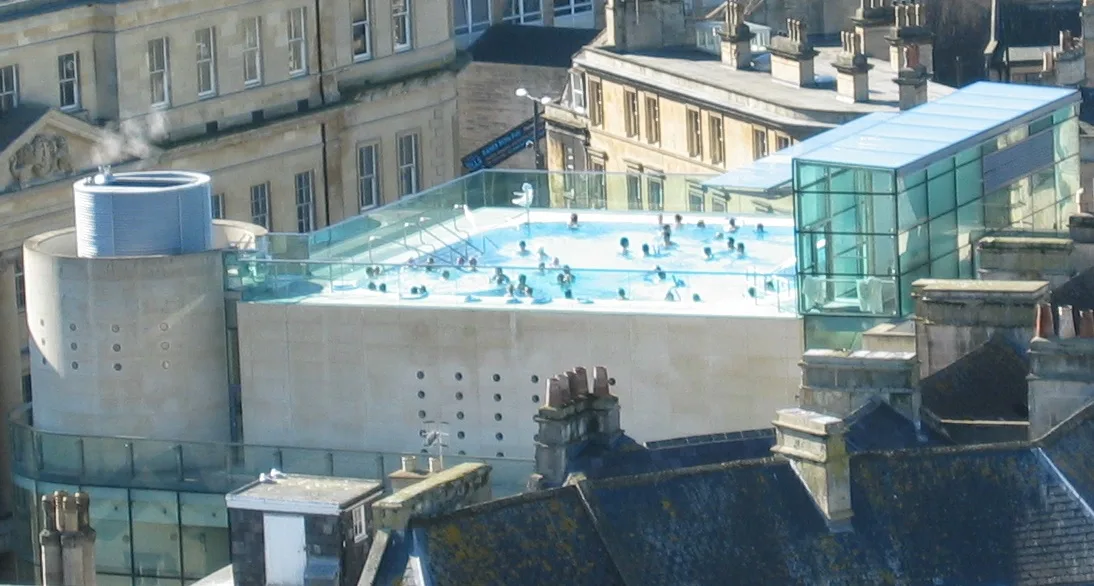
There is exactly one place in Britain where it is different. Thermae Bath Spa in Bath calls itself “Britain’s original natural thermal spa” and invites you to “bathe in Britain’s only naturally warm, mineral-rich waters”. Not the best. The only. The hot springs under Bath are a genuine geological accident, and everything else marketed in this country as a thermal spa is heated water in a nicely tiled room.
If bathing in that water is the point of the trip, there are two ways to do it:
- Thermae Bath Spa itself, which is a public spa rather than a hotel, with an open-air rooftop pool overlooking the city. Note the policy before you plan a couples trip: it is an adults-only spa, with a minimum admission age of 16 and a minimum age of 18 for treatments.
- The Gainsborough Bath Spa, the five-star hotel a few streets away, whose Spa Village Bath is described in its own words as “tapping into the original thermal springs”, offering “a contemporary perspective on the city’s thermal water heritage”. As far as British hotels go, that is a genuinely unrepeatable selling point, because there is only one aquifer and it is under one city.
Everywhere else, the honest question becomes question two.
Question 2: is there something here that does not exist anywhere else?
If the water is ordinary, the setting has to do the work, and “setting” means a fixed physical feature rather than a mood.
Real examples, from the spas’ own descriptions:
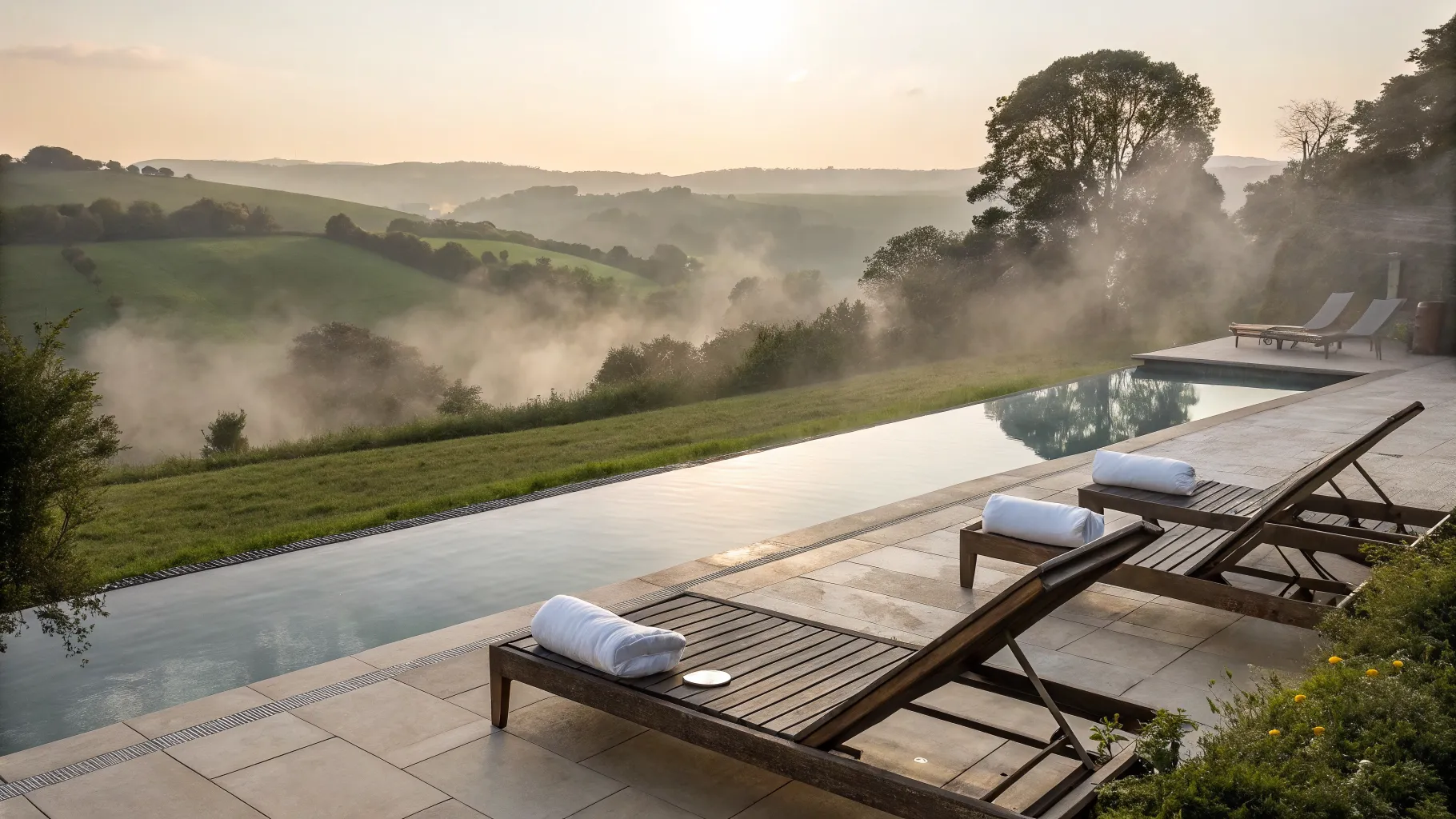
- The Scarlet, on the clifftop above Mawgan Porth in Cornwall, has an outdoor natural swimming pool cleansed by a living reed bed, a clifftop barrel cedar wood sauna, and treatment rooms that are tented and lantern-lit, with a deep relaxation room containing suspended cocoon pods. You cannot get that in a converted hotel basement.
- Rudding Park near Harrogate built its spa on the roof, and sells “Exclusive Roof Top Spa Use” as a bookable thing in its own right, which is the closest most British hotels get to a private spa.
- Seaham Hall on the County Durham coast pairs its Serenity Spa with accommodation that includes coastal lodges and garden suites with their own hot tubs, so the spa does not close on you at eight o’clock.
- Lime Wood in the New Forest laid the Herb House Spa out over three levels, with its own food bar inside the spa, so the day does not break in half when you get hungry.
Any one of those is a reason to choose a specific place. “Luxurious surroundings” is not.
Question 3: are treatments included, or are you paying twice?
The single most common disappointment with a booked spa break is discovering that the price bought you access, and the massage is extra.
Read the inclusions line rather than the headline. There are three different models sold under the same words:
- Access only. Pool, sauna, steam, relaxation room. Treatments are all chargeable. Most “spa break” rates are this.
- Access plus an allowance. A treatment of a set length per person, usually 50 or 55 minutes, sometimes with a limited menu of what qualifies.
- Genuinely inclusive. Facilities, classes and wellness sessions included as standard for staying guests. The Scarlet, for example, states that sauna, steam room, pool use and wellness sessions are included for all its hotel guests.
Then check the second trap: who can book what. The Scarlet is explicit that treatments are available exclusively for overnight hotel guests, with day visitors routed to separate spa days. That is a restriction and a benefit at the same time, and it tells you something about how the place is run.
If you are comparing the two-nights-with-treatments format specifically, our guide to overnight spa breaks sets out what each package type usually contains.
Question 4: will you be sharing it with a hen party?
A spa hotel makes far more money selling day packages than rooms. That means the pool you booked for a quiet Saturday afternoon may be at its busiest exactly when you want it.
Three things to check, all published:
- Facility hours for staying guests. The Scarlet publishes 8am to 8pm for its spa facilities, which is unusually clear. Many hotels do not publish this at all, which is itself informative.
- Whether day guests use the same water as residents. Some larger spas run separate thermal suites for residents. Most do not.
- Age policy. Adults-only is the single biggest predictor of whether a spa is quiet, and it is always stated somewhere. Thermae Bath Spa’s 16 minimum is published on its front page. If a hotel does not say, phone and ask, and ask specifically about the pool rather than the hotel.
The reliable workaround, if a place will not commit: book midweek, or look at twilight and evening spa packages, when the day-guest traffic has gone home.
Question 5: does the rest of the hotel match the spa?
A luxury spa break is roughly four hours in the spa and twenty out of it. Plenty of hotels have spent the budget on the wet area and nothing else.
The tells are the dining and the rooms. Lime Wood runs Hartnett Holder & Co as its main restaurant and keeps a separate food bar inside the spa itself, which means you are not choosing between a robe and a proper dinner. Seaham Hall’s suites with private hot tubs extend the spa into the room. Rudding Park has spa rooms as a distinct accommodation category rather than an upgrade tick box.
Ask a blunter version of the question: if the spa were closed, would you still want to be here for two nights? If the answer is no, it is a day spa with beds.
Six that stand up
Every detail here is what the spa publishes about itself, checked on 28 August 2026. Prices change constantly and we do not quote them; check current rates directly.
Thermae Bath Spa, Somerset. The only genuinely thermal option in the country, adults only from 16, with an open-air rooftop pool. Not a hotel, so pair it with a stay nearby. The reason to go is the water, and the water exists nowhere else in Britain.
The Gainsborough Bath Spa, Somerset. The five-star hotel whose Spa Village Bath taps the same original thermal springs. If you want to sleep upstairs from real thermal water, this is the shortlist and it has one entry.
The Scarlet, Cornwall. Clifftop above Mawgan Porth, with a reed-bed cleansed natural outdoor pool, a cedar barrel sauna on the cliff, a 13 by 4 metre indoor pool, and treatments in tented rooms with cocoon pods afterwards. Facilities and wellness sessions included for hotel guests; treatments reserved for them. See also our Cornwall spa days guide.
Lime Wood, Hampshire. The Herb House Spa runs over three levels in the New Forest, with Ayurvedic treatments and Raw & Cured, its own food bar in the spa. The hotel has 33 bedrooms, which is small enough that the spa never feels like a leisure club.
Rudding Park, North Yorkshire. The Roof Top Spa above Harrogate, with exclusive-use booking available and dedicated spa rooms, in a county that takes spa seriously. More options in spa days in Yorkshire.
Seaham Hall, County Durham. Serenity Spa on the Durham coast, with lodges and garden suites that have private hot tubs. The best of the north east spa options for a couple who want the outdoor water at midnight rather than at two in the afternoon.
Booking it well
Go midweek and go off-season. The same room, the same treatments and a fraction of the crowd. January and February are the quietest months in British spas and the ones with the deepest discounting.
Book treatments before you arrive, not on arrival. Weekend therapist diaries fill weeks ahead. The couples treatment room in particular is usually the first thing gone.
Check the cancellation terms on the treatment, separately from the room. They are frequently different, and the treatment is often the stricter of the two.
Take the voucher route seriously. Spa vouchers and seasonal offers are genuinely cheaper than the standard rate at most British spa hotels; we track the mechanics in spa break discount codes.
Bring your own flip flops and a book. Both cost you nothing and both are hired out at absurd markups. Our what to wear to a spa day page covers the rest.
Frequently asked questions
What is the most luxurious spa in the UK? There is no single answer, but there is a single unique one. Thermae Bath Spa is the only spa in Britain using naturally warm, mineral-rich water, and The Gainsborough Bath Spa is the hotel that taps the same springs. On every other measure, luxury is a matter of which specific features matter to you: setting, exclusivity, inclusions or the standard of the rest of the hotel.
Are there adults-only spa hotels in the UK? Yes, and they are the ones to look for if quiet is the priority. Thermae Bath Spa publishes a minimum admission age of 16 and a minimum of 18 for treatments. Hotel spas vary widely, and many restrict children to certain hours rather than banning them, so check the pool policy specifically rather than the hotel policy.
How much should a luxury spa break cost? Rates move constantly with season, day of the week and how far ahead you book, so any figure we printed would be wrong within a month. The more useful question is what the rate includes, because the gap between access-only and treatment-inclusive packages at the same hotel is often larger than the gap between two different hotels.
Is a spa break worth it for a couple? It is if you check inclusions and crowding first. The two most common complaints are paying twice for treatments that were assumed included, and sharing a small pool with a large day-guest party. Both are avoidable, and both are visible on the hotel’s own website before you book.
What is the difference between a spa break and a spa day? A spa day is facility access with an optional treatment, usually with lunch, and you go home. A spa break includes accommodation and typically evening dining, which is what makes evening and early-morning spa use possible, and that is when British spas are at their best. See couples spa days if you only want the day version.
When is the quietest time to visit a UK spa? Midweek in January and February, or an evening session at any time of year. Weekend afternoons between noon and four are the peak of day-guest traffic almost everywhere.
More options by region in our best spa hotels in England round-up, and for total seclusion, private spa hire in the UK.
Found a place we’ve missed? Tell us about it.
Back to top