Buying Guides
Spa Voucher Expired? Your Rights, and If the Spa Closes
By the Carefree Retreat team
Updated 2026
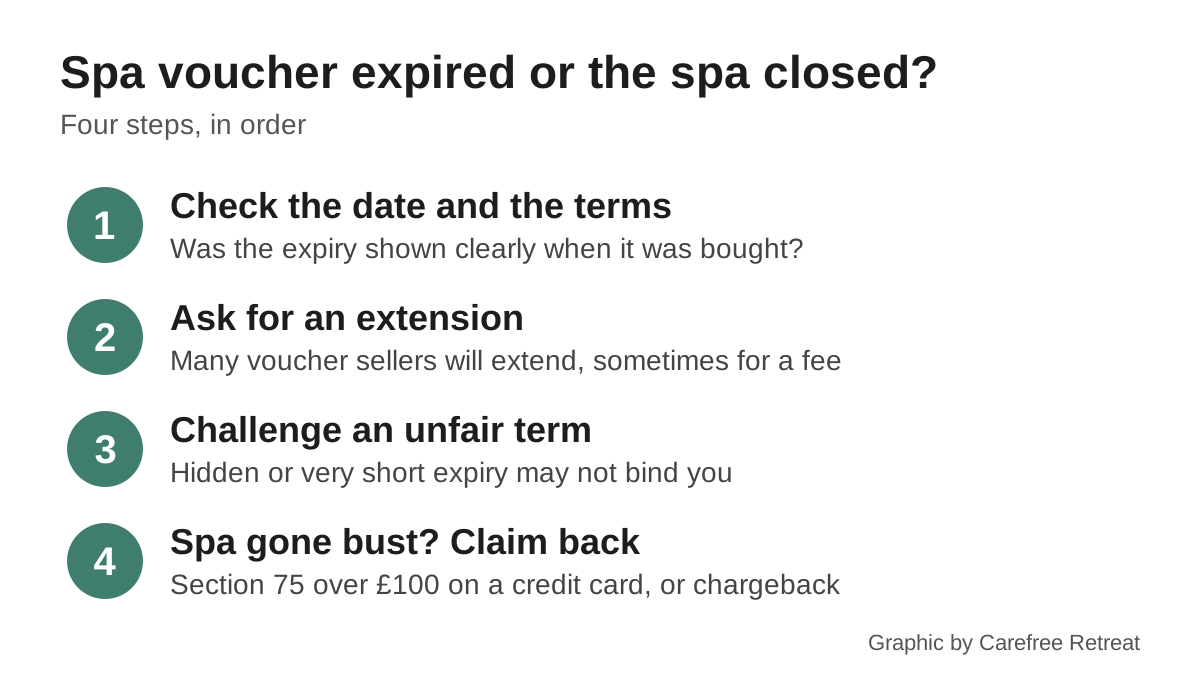
If your spa voucher has expired, your rights depend on three things: how clearly the expiry date was shown when it was bought, who sold it, and how it was paid for. There is no minimum validity period for gift vouchers in UK law, so a spa or voucher company can set an expiry date and usually enforce it. But the date has to be fair and properly brought to the buyer’s attention, and many sellers will extend a voucher if you ask. If the spa has closed or gone into administration, the questions change again.
This page covers expired vouchers, vouchers for a treatment the spa no longer offers, and vouchers from a business that has gone bust, in that order. It is general information about consumer law in the UK, not legal advice on your case.
Is it legal for a spa voucher to expire?
Yes. UK law does not require gift vouchers to last any minimum time, and most spa and experience vouchers carry an expiry date, commonly somewhere between 12 and 24 months from purchase. Once that date passes, the seller does not have to accept the voucher just because you ask.
What the law does require is fairness. Under Part 2 of the Consumer Rights Act 2015, a term in a consumer contract is not binding if, contrary to good faith, it causes a significant imbalance in the parties’ rights to the detriment of the consumer. The Act also requires written terms to be transparent and, if they are to escape a fairness review, prominent. The Competition and Markets Authority’s guidance on unfair terms (known as CMA37) explains how this is applied in practice.
For an expiry date, that usually comes down to two questions:
- Was it shown clearly at the point of sale? An expiry buried in small print that the buyer never saw is much easier to challenge than one printed on the voucher and the checkout page.
- Is the period reasonable? A voucher for a spa day that expires in a few weeks, when the spa is fully booked for months, is the kind of term that can be unfair.
A clearly shown 12-month expiry on a voucher that could have been booked in that time is very unlikely to be unfair. The fairness argument is strongest when the date was hidden, very short, or when the seller’s own lack of availability stopped you booking.
Your voucher has just expired: what to do
- Find the original terms. Check the voucher, the confirmation email and the seller’s website as it was when the voucher was bought. Note the expiry date, any extension policy and whether the voucher is for a set value or a named treatment.
- Ask for an extension, politely and quickly. Many spas and voucher companies will extend a recently expired voucher, sometimes free and sometimes for a fee. In a 2023 Which? report on experience vouchers, one buyer paid £20 each to extend and to exchange Virgin Experience Days vouchers. Ask before you assume.
- Explain if availability was the problem. If you tried to book before the expiry and there were no dates, say so and send screenshots or emails. A seller that sold a voucher it could not honour in time is on weaker ground.
- Challenge an unfair term in writing. If the expiry was hidden or very short, write to the seller saying you consider the term unfair under the Consumer Rights Act 2015 and asking them to honour the voucher. Citizens Advice can help draft this.
- Use the seller’s complaints process, then an ombudsman or small claims. Some voucher companies belong to an alternative dispute resolution scheme. If not, the small claims track of the county court is the last step for a low-value claim.
Who you are dealing with: the spa or a voucher company
The answer to “who do I complain to” depends on who sold the voucher.
- Bought from the spa directly: your contract is with the spa, so the spa’s terms and the spa’s decision on extensions apply.
- Bought from a voucher company such as Buyagift, Red Letter Days or Virgin Experience Days: the voucher company sold it, and you will usually be bound by both its terms and the spa’s booking terms. Which? found in that same 2023 research that two-thirds of experience voucher recipients had run into problems redeeming them, including 15% who could not find an available date. Extensions and exchanges are handled by the voucher company, not the spa.
The contract is usually with the person who bought the voucher, not the person who received it. If you were given the voucher, ask the buyer for the order confirmation and payment details, and consider having them make any complaint or card claim.
A gift voucher is not the same as a booking
This trips people up. A gift voucher is credit or a promise of a treatment, redeemable later, usually by anyone holding it. A booking is a contract for a service on a specific date.
Once you swap the voucher for a booking, the booking terms take over: cancellation deadlines, deposit rules and no-show charges. The 14-day cooling-off right for things bought online does not apply to leisure services booked for a specific date, so a spa day booked with a voucher and cancelled late can be lost entirely under the spa’s terms. Read the booking terms before you pick a date, not after.
If you have a voucher you have not yet used, many voucher companies offer refunds on unused vouchers within 30 days of purchase, according to Which?. After that, expect an exchange or extension rather than a refund.
The treatment or package has been withdrawn
Spas change their menus. If your voucher names a package that no longer exists, you have a reasonable expectation of being offered an equivalent treatment of the same value, or a refund if nothing equivalent is offered. A business that takes payment for a service it then cannot provide has not performed the contract. Put this to the seller in writing, and if they refuse, use the payment protections below.
If the voucher is for a monetary value rather than a named treatment, a price rise means the voucher simply buys less. In the Which? research, 18% of experience voucher holders found the voucher only partly covered the cost, paying an average of £21.40 extra.
The spa has closed or gone into administration
When a business enters an insolvency process, voucher holders who are not accepted become unsecured creditors. R3, the insolvency practitioners’ trade body, points out that unsecured creditors rank below secured lenders and preferential creditors such as employees, and there is rarely enough money to pay everyone in full.
How the voucher is treated depends on the process:
- Administration aims to rescue the business, so an administrator may decide to keep honouring vouchers to protect the brand and sell it as a going concern. Watch the business’s website and social media for an announcement.
- Liquidation winds the company down, and vouchers are far less likely to be accepted.
If vouchers are refused, you can register a claim with the administrator or liquidator, but there is no guarantee of a meaningful payout, and it can take a long time. Your card company is usually the faster route.
Section 75 and chargeback
- Credit card, over £100: under section 75 of the Consumer Credit Act 1974, the card provider is jointly liable with the seller when a single item costs more than £100 and no more than £30,000. If the spa or voucher company cannot provide what was paid for, claim from the card provider. Note that it protects the person who paid, not the recipient.
- Debit card, or credit card under £100: ask your bank for a chargeback. This is a card scheme process rather than a legal right, and schemes set time limits, so act as soon as you know the service will not be provided.
- PayPal and similar: check the payment provider’s buyer protection terms.
Holding a voucher through a third-party voucher company can work in your favour here: if one spa on its list closes, the voucher company may let you exchange for another venue.
How to avoid losing a spa voucher
- Book within the first few months. Popular spas fill weekends far in advance, and the closer to expiry you get, the fewer dates are left. Our last minute spa breaks page covers midweek availability.
- Screenshot the terms when you buy or receive it. It is your evidence if the expiry later turns into a dispute.
- Pay over £100 on a credit card when buying a voucher as a gift, for section 75 cover.
- Put the expiry date in your calendar with a reminder a few months before.
- Choose longer validity when buying. If you are choosing between sellers, the length of the validity period matters as much as the price. Our spa gifts and vouchers guide compares options.
Frequently asked questions
Can a spa refuse an expired voucher? Usually yes, if the expiry date was clearly shown when it was bought and the period was reasonable. There is no minimum validity in UK law. You can still ask for an extension, and many sellers will agree, sometimes for a fee.
Is a short expiry date on a gift voucher legal? It can be challenged if it is unfair under the Consumer Rights Act 2015, for example if it was hidden in small print or so short that the voucher could not realistically be used. A clearly shown 12-month expiry is very unlikely to be unfair.
What happens to my spa voucher if the spa goes into administration? The administrator decides whether to honour vouchers. If they do not, you become an unsecured creditor and are unlikely to get much back, so claim through your card provider instead: section 75 for credit card purchases over £100, or chargeback otherwise.
Can I get a refund on an unused spa voucher? Not automatically. Many voucher companies refund unused vouchers within 30 days of purchase, but after that most offer only an exchange or extension. Check the seller’s terms.
Who can claim under section 75 for a gift voucher? The person who paid with their credit card. If you received the voucher as a gift, the buyer needs to make the claim.
Can I extend an expired spa voucher? Often, yes. Contact the seller, the spa itself or the voucher company, as soon as you notice. Some extend free as a goodwill gesture, some charge a fee, and some refuse once the date has passed.
Found a place we’ve missed? Tell us about it.
Back to top