Buying Guides
Cancel a Spa Break or Retreat: Your Refund Rights in 5 Cases
By the Carefree Retreat team
Updated 2026
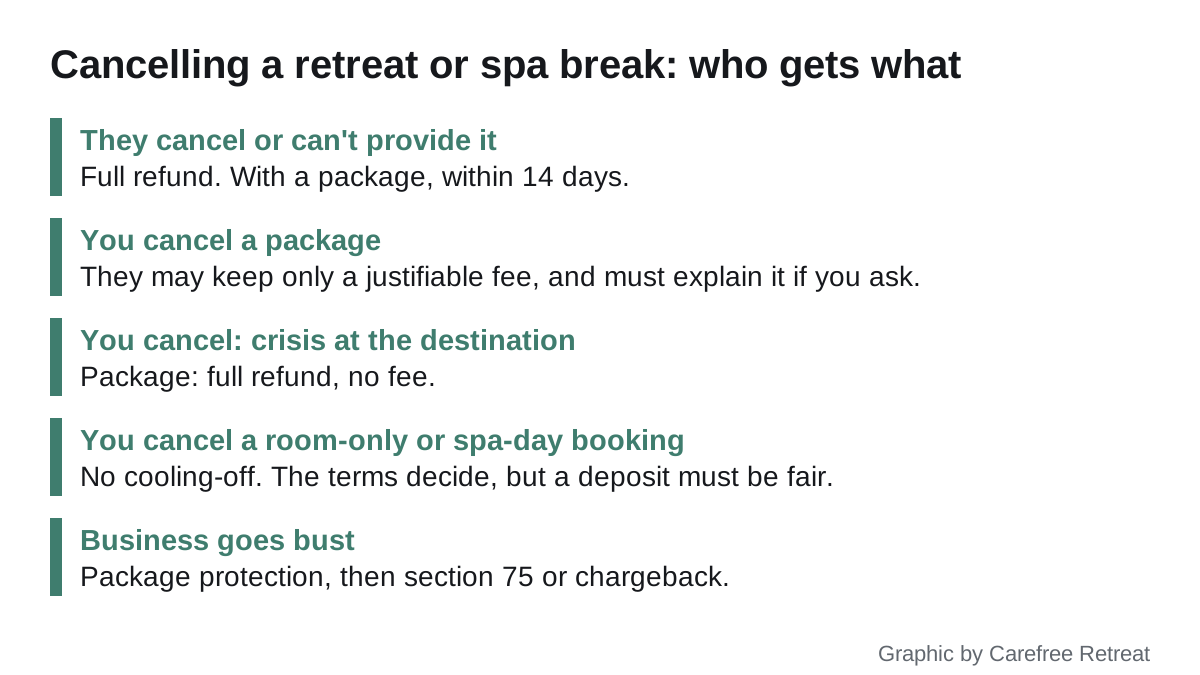
If you need to cancel a spa break or retreat, your refund rights depend on one thing more than any other: what kind of booking you made. Most people assume there is a 14-day cooling-off period, as there is when you buy goods online. For a booking tied to a specific date there usually is not, and that is the single most misunderstood point in this area. What you get back instead depends on whether it was a package, who did the cancelling, and how you paid.
Below we go through the five situations people actually end up in. This is general information about the law in the UK, not legal advice on your booking.
Why there is no 14-day cooling-off period
The 14-day right to cancel comes from the Consumer Contracts (Information, Cancellation and Additional Charges) Regulations 2013, and it applies to most things bought online or by phone. But regulation 28(1)(h) excludes “the supply of accommodation, transport of goods, vehicle rental services, catering or services related to leisure activities, if the contract provides for a specific date or period of performance” (legislation.gov.uk).
A hotel spa break on set dates, a spa day booked for a particular Saturday or a yoga retreat that runs from Friday to Sunday all fall into that exclusion. So the moment you book, you are bound by the business’s own cancellation terms, unless something below gives you more.
A gift voucher with no date attached is different, and is covered in our page on spa voucher expiry rights.
First, work out whether you booked a package
This matters more than most people realise, because the Package Travel and Linked Travel Arrangements Regulations 2018 give you rights that ordinary bookings do not have, and you do not need flights for them to apply.
Broadly, a package is two or more different types of travel service combined for the same trip, such as accommodation plus transport, or accommodation plus another tourist service that makes up a significant part of the value or is an essential feature of the trip. A residential yoga retreat that sells you a room together with a programme of classes, meals and workshops is often a package. A hotel room with one spa treatment thrown in usually is not, because the treatment is a small part of the price. Our page on ATOL and package protection for retreats explains the test in more detail.
If you are not sure, ask the organiser in writing: “Is this booking a package under the Package Travel Regulations 2018?” They have to give you package information before you book if it is one.
Case 1: the spa or organiser cancels
If the business cancels, or cannot provide what you booked, you are entitled to your money back. It has not delivered the service you paid for, and keeping your payment would leave it in breach of contract.
With a package, the rules are specific. An organiser can cancel and refund you without paying extra compensation only if too few people booked (and it tells you in time: at least 20 days before a trip of more than six days, 7 days before a trip of two to six days, or 48 hours before a shorter one), or if unavoidable and extraordinary circumstances stop it going ahead. In either case, regulation 14 says the full refund must reach you without undue delay and within 14 days.
If the organiser makes a significant change before you travel, such as a different venue, a shorter programme or a price rise of more than 8%, regulation 11 lets you cancel without a fee and get everything back within 14 days, or accept a replacement.
A credit note or “rebooking voucher” is an offer, not your only option. You can say no and ask for the cash.
Case 2: you cancel a package
You can cancel a package at any time before it starts (regulation 12). The organiser can charge a termination fee, but the law limits it:
- The fee must be “appropriate and justifiable”.
- The contract can set standard fees on a sliding scale, based on how close to the start you cancel and what the organiser can save or recover by reselling your place.
- Without a standard scale, the fee must equal the price minus what the organiser saves and earns by reusing the services.
- If you ask, the organiser must justify the amount.
That last point is worth using. If a retreat organiser keeps 100% of the price when you cancel two months ahead and then sells your room to someone else, ask it to explain the fee in writing.
You can also pass your place to someone else rather than cancelling. Under regulation 9 you can transfer a package to another person who meets the conditions, as long as you give reasonable notice; seven days or more before the start always counts. The organiser can charge the actual cost of the transfer, but no more.
Case 3: something serious happens at the destination
If “unavoidable and extraordinary circumstances” at the destination or close to it significantly affect the package, or getting there, you can cancel a package before it starts without paying any termination fee, and get a full refund (regulation 12(7) and (8)). Think serious flooding, wildfires, an outbreak of disease or civil unrest at the retreat’s location, not bad weather forecasts or a personal change of plan. Official advice against travel to the area from the Foreign, Commonwealth and Development Office is often strong evidence.
This right covers packages only. For a room-only booking, you would be relying on the business’s goodwill, the contract terms, or the general law of frustration, which is much harder to rely on.
Case 4: you cancel a booking that is not a package
This is the most common situation: a spa day, a room-only spa break, or a retreat booked as separate parts. Here your rights depend on the terms you agreed, but those terms must be fair under the Consumer Rights Act 2015. A term that causes a significant imbalance against you, contrary to good faith, is not binding.
The Competition and Markets Authority has set out what tends to make deposits and cancellation charges fair, in warnings it sent to more than 100 wedding and event venues (gov.uk):
- A deposit should be a small proportion of the price and do no more than reserve the booking.
- Advance payments should reflect the costs the business actually incurs.
- You should not lose a large advance payment whatever the circumstances.
- Cancellation charges on a sliding scale should reflect the business’s likely loss.
So “non-refundable” on a confirmation email is not the final word. If you cancel well ahead and the spa can easily resell your slot, keeping the full price is much harder to justify than keeping a modest deposit. Write to the business, point to the Consumer Rights Act 2015 and ask it to reduce the charge to its actual loss. Many will offer a free date change instead, which is often the fastest result.
If you cancel because you are ill, the law gives no special right to a refund. That is what travel or cancellation insurance is for, so check the policy’s wording before you book anything expensive.
Case 5: the business goes bust
If the business stops trading before your booking:
- A protected package: you get your money back through the organiser’s insolvency protection, which may be ATOL (if flights were included), a bond, insurance or a trust account. See our ATOL and package protection page.
- Paid by credit card, over £100: section 75 of the Consumer Credit Act 1974 makes your card provider jointly liable with the business for claims on single items costing more than £100 and up to £30,000. You can claim even if you only put part of the price on the card.
- Paid by debit card, or under £100 on a credit card: ask your bank for a chargeback. This is a card scheme rule, not a legal right, and the schemes set time limits, so act quickly.
How to ask for your money back
- Find the terms you agreed when you booked. Screenshot the booking page and save the confirmation email.
- Put your request in writing. Say whether it is a package, who cancelled and when, and what you are asking for: a full refund, a refund less a justified fee, or a transfer.
- Ask for a justification of any fee, quoting regulation 12(6) for a package or the Consumer Rights Act 2015 for anything else.
- Give a deadline of 14 days.
- Escalate. Use the card claim routes above, an alternative dispute resolution scheme if the business belongs to one, or the small claims court. Citizens Advice can help with a letter.
Frequently asked questions
Can I cancel a spa break within 14 days for a full refund? Usually not. The 14-day cooling-off right does not apply to accommodation or leisure services booked for a specific date. Your rights come from the booking terms, which must be fair, and from the Package Travel Regulations if it is a package.
Can a spa keep my deposit if I cancel? It can keep a fair deposit that is a small part of the price. Keeping a large advance payment when the spa can resell your booking is more likely to be an unfair term under the Consumer Rights Act 2015.
What if the retreat organiser cancels? You are entitled to a full refund. If it was a package, the organiser must pay it within 14 days. You do not have to accept a credit note.
Do I get a refund if I cancel a retreat because I am ill? There is no legal right to a refund for illness. A package organiser can only charge a justifiable fee, and travel or cancellation insurance is the usual way to cover the rest.
Is a UK yoga retreat a package holiday? It can be, even without flights. If it combines accommodation with another tourist service, such as a programme of classes, that is a significant part of the price or an essential feature of the trip, the Package Travel Regulations 2018 are likely to apply.
Can I give my retreat place to a friend instead of cancelling? With a package, yes. You can transfer it to someone who meets the booking conditions with reasonable notice; seven days or more before the start always counts. The organiser can only charge its actual cost of the transfer.
Sources
- Consumer Contracts Regulations 2013, regulation 28: the accommodation and leisure exclusion from the cancellation period.
- Package Travel and Linked Travel Arrangements Regulations 2018, regulations 9 to 14: transfer, price changes, cancellation and refunds.
- Consumer Credit Act 1974, section 75.
- Competition and Markets Authority, wedding venues advised to play fair: fairness of deposits and cancellation charges.
Found a place we’ve missed? Tell us about it.
Back to top