Buying Guides
EES and ETIAS for UK Travellers: ETIAS Still Not Live
By the Carefree Retreat team
Updated 2026
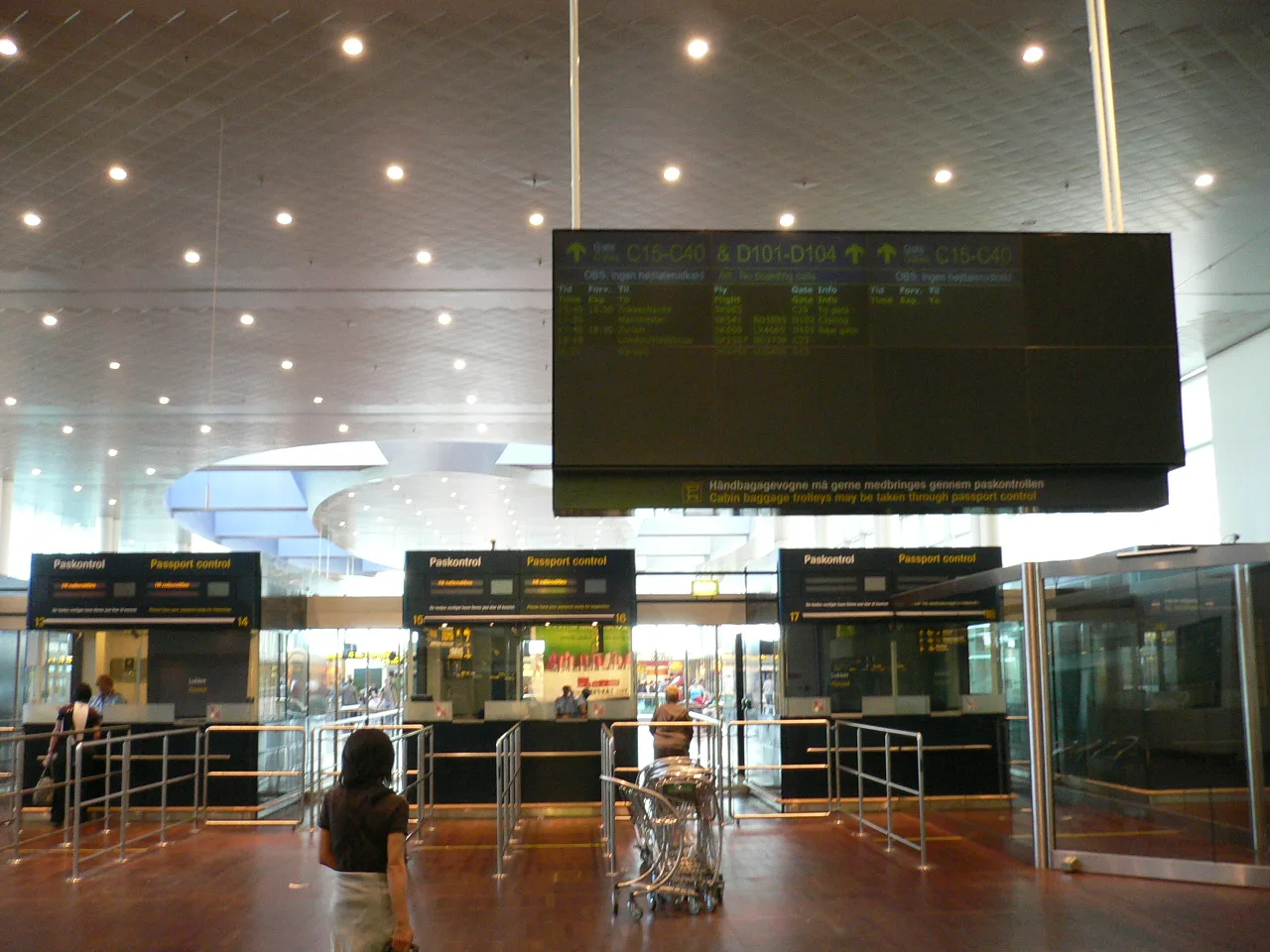
If you are booking a retreat in Europe, the position on EES and ETIAS for UK travellers as of September 2026 is simpler than the headlines suggest. One system is running and you deal with it at the border. The other is still not switched on, cannot be applied for, and has no start date.
EES is live. It has been registering travellers at Schengen external borders since 12 October 2025 and replaced the passport stamp. You do nothing in advance; you give a photo and fingerprints at the border.
ETIAS is not live. It was scheduled for late 2026, and in July 2026 the EU removed that date from its own website and replaced it with a promise to announce the start “several months prior to its launch”. There is nothing to apply for, and anyone charging you for one now is selling you nothing.
That distinction matters for a retreat because retreats are booked months ahead, and half the travel advice online still tells you to sort out an ETIAS before you go.
EES: what actually happens at the border
The EU Entry/Exit System registers every non-EU traveller crossing a Schengen external border, in and out. Per the House of Commons Library’s briefing on the two systems, published 17 July 2026, the record holds your name, travel document type, fingerprints, a facial image, and the date and place of each entry and exit. It replaces the manual passport stamp, which the European Commission considered slow and unreliable for counting days.
The practical version for a first trip:
- You are directed to a kiosk or a booth on first arrival. Fingerprints and a photograph are taken. There is no cost and no form to fill in beforehand.
- On later trips within the same cycle, your fingerprints and face are checked against the existing record rather than taken again.
- Children under 12 do not have to give fingerprints.
- Your record is normally erased three years after your last trip to an EES country.
- Border officers oversee the process; the kiosk is not the whole of it.
Where it applies: 25 EU countries, which is every member state except Cyprus and Ireland, plus Norway, Iceland, Switzerland and Liechtenstein. Twenty-nine in total. If you hold a residence permit or a long-stay visa for an EU country, you are outside EES.
Ireland is the useful exception for anyone who finds all of this tiresome. Ireland operates neither system, and the UK and Ireland share the Common Travel Area, so a retreat in County Clare involves none of it.
The bit the roll-out actually delivered
EES was meant to be fully operational at all crossings from 10 April 2026. It was not, and the Commons Library briefing is blunt about it: the system had still not been fully implemented at every Schengen border crossing by that date.
What followed is worth knowing before you build a travel day around it. Lengthy delays were reported at some crossings after 10 April. Greece announced it was suspending EES registration for British visitors, then clarified that there would be no exemption specific to British citizens but that processing could be partially suspended at certain crossings during periods of high passenger traffic, which the EES regulation permits. European aviation bodies wrote to the Commission in early July 2026 asking for the power to suspend EES entirely whenever passenger volumes exceed border capacity, citing “unsustainable pressure”. Later in July, nine member state governments asked for the safeguard mechanism allowing partial suspension to be extended beyond September 2026, when it was due to expire.
So the honest advice is not “expect chaos” and not “it is all fine”. It is: the queue you get depends on the airport, the day and whether that country is using its flexibility. Build in time you would not have needed in 2024, and do not book a transfer that assumes a 30-minute exit from the terminal.
If you are travelling through Dover, Eurostar or Eurotunnel
The three UK departure points where French officers run juxtaposed border controls are the Port of Dover, Eurostar at St Pancras and the Eurotunnel terminal at Folkestone. All three are inside EES.
As of the Commons Library’s July 2026 briefing, none of them was fully operational. Travellers at Dover and the Eurotunnel terminal were being registered manually, without biometrics, because the software linking to the French side was still not connected, and the kiosks at St Pancras were not fully working either. Registration at Dover and Eurotunnel means getting out of your vehicle at a kiosk; Dover dropped an earlier plan to hand tablets into cars.
That situation moves. Check your operator’s own page in the week before you travel rather than relying on anything written months earlier, including this page.
Frontex has a “Travel to Europe” app that allows partial EES registration before you go, though fingerprints still have to be taken at the border. Its coverage is narrow: at present it works only for travel to Sweden and Portugal.
ETIAS: what it will be, when it arrives
ETIAS is a travel authorisation, not a visa, and it is the one you apply for online in advance. When it does arrive, the terms are already set:
- €20 for applicants aged 18 to 70. Free for under-18s and over-70s. That fee rose from an originally planned €7 in July 2025.
- Valid for three years, or until your passport expires, whichever comes first.
- Applied for online or through an app, and issued within minutes in most cases. Some applications need further checks, which can take up to 30 days.
- Required for every EU member state except Ireland, plus the four non-EU Schengen countries.
- Exempt: UK nationals and family members with residence rights under the Withdrawal Agreement, that is those resident in an EU state on 31 December 2020, and holders of residence permits for an ETIAS country.
There will also be a cushion at the start. Fragomen’s tracking of the launch notes a six-month transitional period followed by a six-month grace period before full enforcement, so the first year will not be a hard cutoff.
What there is not, right now, is a date. The EU’s own ETIAS page carried a late-2026 target until July 2026, when it was amended to say the specific start date will be communicated several months before launch. Nothing has replaced it.
A practical consequence for retreat bookings: you cannot pre-empt this. If you are booking a retreat for spring 2027, the sensible plan is to check the official EU travel site about three months before you fly, because the EU has committed to giving several months’ notice. Do not buy an ETIAS from a third-party site in the meantime. The scheme does not exist yet, and when it does, €20 to the EU is the whole cost.
The rule that catches retreat-goers out
None of this changes the 90-day limit, and the 90-day limit is what actually bites people booking long stays.
Schengen rules restrict UK visitors to 90 days in any rolling 180-day period. EES exists partly to count those days accurately, which is the real change: the old system relied on a border officer reading smudged stamps, and the new one does the arithmetic. If you have been doing a fortnight in Spain each quarter and a month somewhere warm in the winter, that total is now tracked automatically, and overstays are recorded.
For a long retreat, a yoga teacher training or a multi-month stay, 90 days is the ceiling, and beyond it you need a national long-stay visa from the country you are going to. Plan that around the retreat dates, not after you have paid the deposit.
What to do, in order
- Check your passport first. It must have been issued less than 10 years before the date you enter, and have at least three months left on the day you plan to leave the Schengen area. This trips up more UK travellers than either new system.
- Count your Schengen days across the previous 180 before booking anything long.
- Do nothing about ETIAS. There is nothing to do. Diarise a check three months before a 2027 trip.
- Allow extra time at the border, especially at Dover, Folkestone and St Pancras, and especially in school holidays.
- Read the current GOV.UK guidance in the fortnight before you travel: the EU Entry/Exit System page is the official UK line and is updated as things move.
If Europe is starting to feel like hard work, the alternative is well covered: our best wellness retreats in the UK and luxury spa breaks in the UK pages need none of the above. For those going anyway, spa breaks in Europe, yoga retreats in Europe and the Budapest thermal baths guide are the places to start.
Current as of 24 September 2026. EES and ETIAS dates have moved repeatedly; check GOV.UK before you travel.
Frequently asked questions
Do UK travellers need an ETIAS right now? No. ETIAS is not in operation and there is no application to make. The EU removed its late-2026 target in July 2026 and has said it will announce the start date several months before launch. Any website selling you an ETIAS today is selling you nothing.
What is the difference between EES and ETIAS? EES is an automatic border registration system: it takes your fingerprints and photograph when you cross, and replaces the passport stamp. ETIAS is an advance online authorisation you apply and pay for before you travel. EES is live; ETIAS is not.
How much will ETIAS cost and how long will it last? €20 for applicants aged 18 to 70, free for under-18s and over-70s. It will be valid for three years, or until your passport expires if that comes sooner, and covers multiple trips.
Does EES apply if I am going to Ireland? No. Ireland operates neither EES nor ETIAS, and the UK and Ireland share the Common Travel Area. Cyprus is also outside EES, as it is not in the Schengen area.
Will EES slow down my journey? Possibly, and it depends where you cross. Registration is quick once you reach a kiosk, but capacity is the constraint, and several member states have been using the regulation’s flexibility to suspend processing temporarily at busy crossings. Allow extra time, particularly at Dover, the Eurotunnel terminal and St Pancras.
Does any of this change the 90-day rule? No, but it enforces it. UK visitors are still limited to 90 days in any rolling 180-day period, and EES now counts those days automatically rather than relying on passport stamps. For a stay longer than 90 days you need a national long-stay visa.
What about my passport? The two tests that turn people away at the gate are unchanged: the passport must have been issued less than 10 years before the date you enter, and must have at least three months remaining on the day you intend to leave the Schengen area.
Found a place we’ve missed? Tell us about it.
Back to top