Buying Guides
Spa Pool Safety Rules UK: What HSG282 Makes Spas Check
By the Carefree Retreat team
Updated 2026
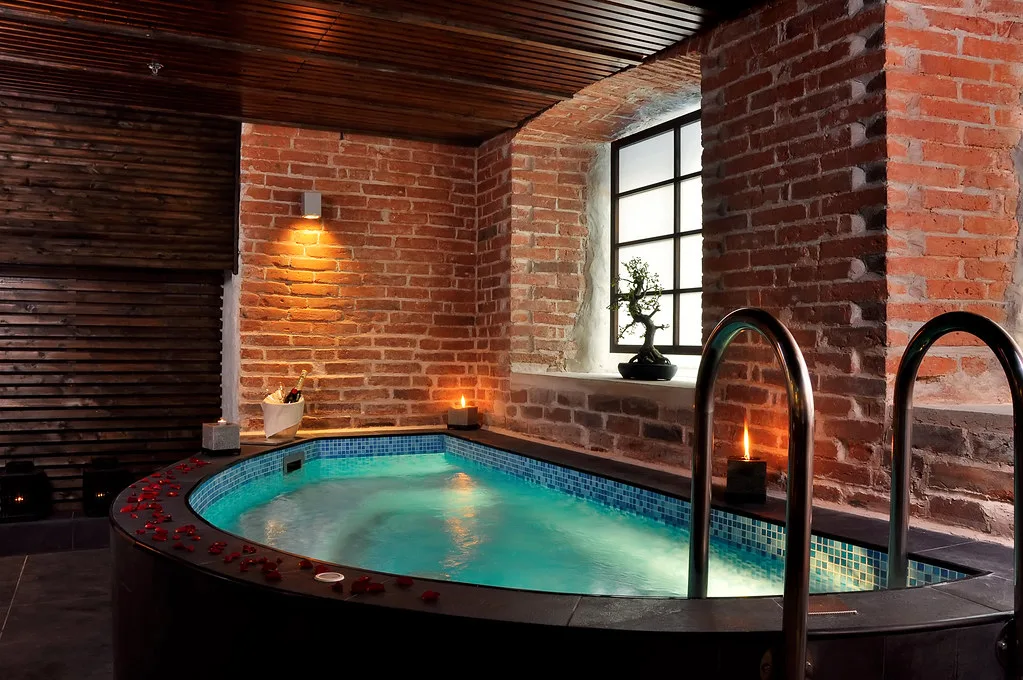
The spa pool safety rules UK operators follow come from one HSE publication, HSG282, The control of legionella and other infectious agents in spa-pool systems. It sets out exactly how often a spa must test its hot tub water, what the readings should be, how often it must be drained, and when it must close. You never see any of it as a guest, but you can ask about it, and the answers tell you a lot about how well a spa is run.
This page covers what the guidance requires, the questions worth asking at reception, the signs of a badly run pool you can spot yourself, and who should skip the hot tub altogether.
Why hot tubs need their own rules
A hot tub, spa pool or whirlpool is close to ideal for bacteria. HSG282 explains why: the water sits between 30 and 40°C, inside the 20 to 45°C range where legionella and other organisms “can rapidly grow”; the jets throw a fine spray into the air above the water, which bathers breathe in; and the small volume of water picks up a heavy load of sweat, skin, cosmetics and spray tan from every bather.
Three infections are the concern:
- Legionnaires’ disease, a serious pneumonia caught by breathing in contaminated spray. HSE notes outbreaks linked to spa pools in leisure centres, hotels, holiday homes, on cruise ships and even on display at shows.
- Pseudomonas folliculitis, an itchy red rash of infected hair follicles. HSG282 says it usually appears about 48 hours after bathing, anywhere from 8 hours to 5 days, and is linked to how long you stayed in.
- Gastric bugs, signalled by E. coli in the water, which means faecal contamination has got in and the treatment has not dealt with it.
Legally, a spa’s duties come from the Health and Safety at Work Act and the COSHH Regulations, with HSE’s Approved Code of Practice L8 on legionella. HSG282 is the guidance that tells operators how to comply, and environmental health officers use it as their benchmark. You can read it free on the HSE website.
What HSG282 says a spa must do
These are the main figures from the guidance for a commercial spa pool, the kind you find in hotel and day spas.
| Check | What HSG282 expects |
|---|---|
| Free chlorine | 3 to 5 mg/l (at pH 7), or total bromine 4 to 6 mg/l |
| pH | Between 7.0 and 7.6 |
| Water clarity, pH and disinfectant tests | At opening, then every two hours while open |
| Dosing equipment working | Checked daily at opening |
| Drain, clean whole system and refill | Daily to weekly, depending on the risk assessment and how busy it is |
| Full water replacement | At least when bather numbers reach 100 times the pool’s volume in cubic metres |
| Lab tests for bacteria (colony count, coliforms, E. coli, Pseudomonas) | At least monthly |
| Legionella test | At least quarterly |
| Bathing sessions | Designed around 15 minutes in the water, then a 5-minute rest |
Chlorine and pH work together. The guidance stresses that the disinfectant’s effectiveness depends directly on pH, which is why both are tested at the same time, every two hours.
When a spa must close the pool
HSG282 tells operators to shut the pool immediately if routine lab results show gross contamination, including more than 1,000 legionella per litre, more than 50 Pseudomonas per 100 ml, or E. coli above 10 per 100 ml alongside other raised counts. The pool then has to be shock dosed, drained, cleaned, refilled and retested before it reopens. A closed hot tub on your spa day is irritating, but it is a sign the system is working.
Holiday lets and lodges with hot tubs
If you book a cottage or lodge with a private hot tub, the owner is running a business and HSG282 applies to them too. For these domestic-type tubs used as a business, the water should be changed after each rental or each week, whichever is sooner, and pH and disinfectant checked at least twice a day depending on use. In practice that means the tub should be freshly drained, cleaned and refilled before you arrive.
Questions to ask at reception
Most spa staff will answer these happily. A spa that cannot is telling you something.
- “How often do you test the hot tub water?” The answer you want: at opening and every two hours. Many spas use automatic dosing controllers that monitor the water continuously as well.
- “Can I see today’s test log?” HSG282 expects results to be recorded. Some spas display a board with the latest readings.
- “When was it last drained?” In a busy spa, recently; daily is common in high-use pools.
- “Do you send water off for lab testing?” Monthly bacterial tests and quarterly legionella tests are the HSG282 minimum.
- “Is there a limit on time in the water?” Signs suggesting sessions of about 15 minutes show the spa follows the guidance.
For a lodge or holiday cottage, ask the owner when the tub is drained and refilled, and whether there is a test kit and instructions for topping up the chemicals during your stay.
Signs of a badly run pool you can spot yourself
- Cloudy or foamy water. Clarity should be checked every two hours. If you cannot see the floor and the seats clearly, stay out.
- Slimy surfaces or a dirty waterline. HSG282 calls for the waterline to be wiped daily. A greasy tidemark or slimy steps mean that is not happening.
- An overcrowded tub. The guidance says bathers should never outnumber the seats.
- No shower before you get in. Showering beforehand is part of the guidance, because it cuts the load the chlorine has to deal with. A spa that does not ask you to shower is not managing its water.
- A harsh “swimming pool” smell or stinging eyes. That is usually not too much chlorine but chlorine that has reacted with sweat and other pollution, which points to a pool working hard. It is worth mentioning at reception.
If you notice any of these, say so. Staff should check the water there and then.
Who should think twice about the hot tub
HSG282 itself warns that prolonged immersion in water above body temperature can be risky for people who are pregnant, have heart or circulation problems, or have a condition that causes fits, and for people taking medication for heart or nervous system conditions. Legionnaires’ disease is also more serious for people over 45, smokers and heavy drinkers, and those with chronic illness or a weakened immune system.
If you are pregnant, our pregnancy spa day page covers which treatments and facilities are usually off limits. Otherwise: keep sessions short, drink water, do not drink alcohol while you soak, and get out if you feel dizzy.
If you develop a rash within a few days of a hot tub, or flu-like symptoms with a cough and breathlessness within two weeks, see a GP or call NHS 111 and mention the spa visit.
Private and outdoor hot tubs
Outdoor hot tubs and private spa suites follow the same guidance. Outdoor water is harder to keep balanced, because sun, rain and leaves all use up disinfectant faster. If you are booking somewhere for its outdoor tubs, our outdoor spa guide and private spa UK pages list places worth the trip.
If you are thinking of putting a hot tub in at home, the guidance does not apply to private household use, but the same chemistry does. Our hot tub running cost page covers what owning one really costs.
Frequently asked questions
What are the spa pool safety rules in the UK? They come from HSE guidance HSG282, under the Health and Safety at Work Act and COSHH. It sets free chlorine at 3 to 5 mg/l, pH between 7.0 and 7.6, tests every two hours while open, monthly lab tests for bacteria and quarterly tests for legionella.
How often should a spa hot tub be drained? For commercial spa pools, daily to weekly depending on the risk assessment and bather numbers. For hot tubs at holiday lets, HSG282 says after each rental or weekly, whichever is sooner.
Can you catch Legionnaires’ disease from a hot tub? Yes, by breathing in contaminated spray from the jets. It is rare in properly managed pools, which is the point of the testing and draining regime in HSG282.
What is hot tub rash? Pseudomonas folliculitis, an itchy red rash caused by bacteria in poorly treated water. HSG282 says it usually appears about 48 hours after bathing. See a GP if you get one, and tell the spa.
How long should you stay in a spa hot tub? The HSE guidance designs bather numbers around 15-minute sessions followed by a 5-minute rest. Many spas post similar limits, and shorter is sensible if you are pregnant or have a heart condition.
Do hot tubs at holiday cottages have to follow HSG282? Yes. HSE says hot tubs in holiday parks, rental lodges and hotel rooms are a business activity and fall under the Health and Safety at Work Act, so the guidance applies.
Sources
- HSE, HSG282: The control of legionella and other infectious agents in spa-pool systems, first edition 2017: paragraphs 7 to 8, 23, 28, 76, 116 to 117, 130, 135, 153 and 162, and Table 1.
- HSE, Approved Code of Practice L8, Legionnaires’ disease: the control of legionella bacteria in water systems.
Found a place we’ve missed? Tell us about it.
Back to top