Buying Guides
Yoga Retreat Travel Insurance Cover: 5 Exclusions to Check
By the Carefree Retreat team
Updated 2026
Most people booking a retreat abroad assume their annual policy has them covered. For a plain yoga retreat it usually does: yoga appears on the activity lists of mainstream UK insurers. The travel insurance yoga retreat cover problems start with everything else a modern retreat programme includes, from aerial yoga and ice baths to fasting, breathwork and plant-medicine ceremonies, most of which no standard policy names at all.
We read one high-street insurer’s full activity list and the general exclusions that sit in almost every UK policy, plus Financial Ombudsman decisions on how they are applied. Here are the five places cover falls away, and what to do about each.
1. Activities that are not on the list
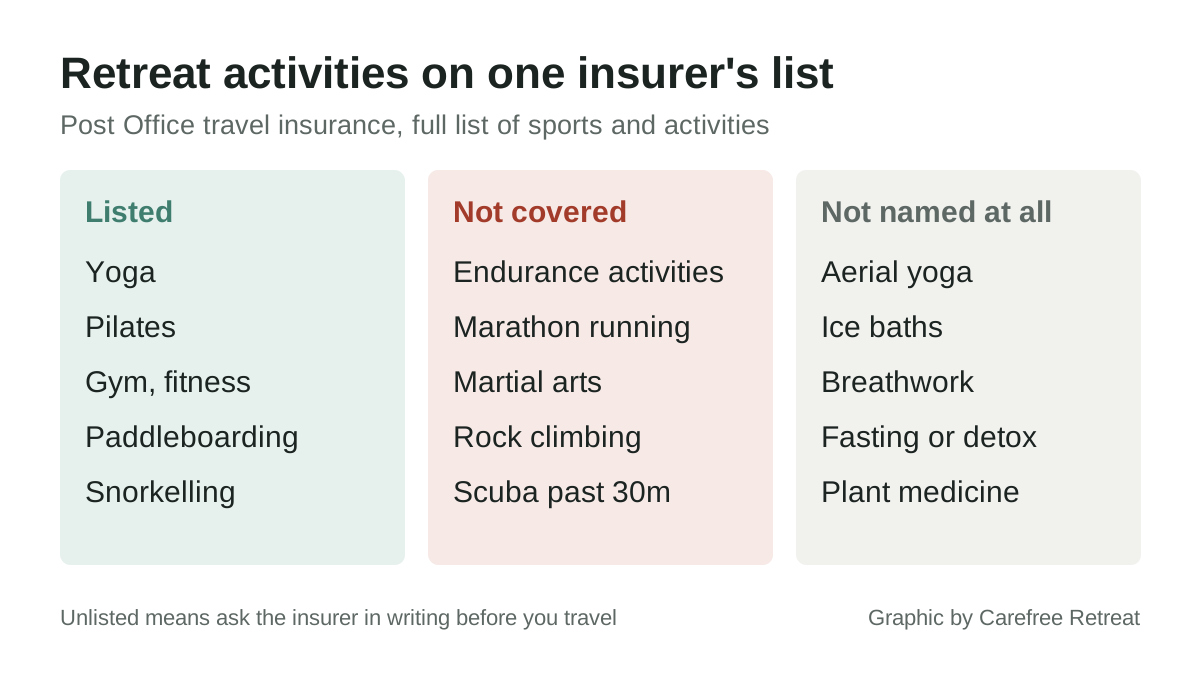
Travel insurers do not cover “anything you do on holiday”. They publish a list of sports and activities, and cover applies to what is on it. The Post Office’s full list of sports and activities is a good example of a mainstream one. For a retreat, it reads like this:
- Listed: yoga, pilates, gym fitness, swimming, snorkelling, paddleboarding, and hiking or trekking up to 4,000 metres.
- Not covered: endurance activities, marathon running, martial arts, rock climbing, scuba diving below 30 metres, and walking or trekking above 4,000 metres or with ropes, crampons or guides.
- Not named at all: aerial yoga, ice baths and cold plunges, breathwork, fasting or juice programmes, sweat lodges, and anything involving plant medicine.
Two things follow. A “bootcamp” or “fitness retreat” built around long runs or circuits can drift into “endurance activities”, which this list excludes outright. And an activity that is simply absent, like aerial yoga, is the grey zone: the insurer may say yes or no, and you want that answer before you travel, in writing.
The same list carries general conditions that matter on a retreat: cover depends on using the recommended safety equipment, following the instructor’s rules, and, where a local operator runs the activity, that operator being properly qualified and licensed. Sea activities must stay within 12 nautical miles of the coast. Competition is excluded, so a “retreat challenge” with a timed race is worth querying too.
What to do: list every activity on the retreat programme, check each against your insurer’s activity table, and email the insurer about anything unlisted. Some insurers sell an activities or adventure pack for an extra premium.
2. Drugs, alcohol and plant medicine
Almost every UK policy has a general exclusion for alcohol and drugs. In one Financial Ombudsman decision, the policy wording was:
“The use or abuse of alcohol or drugs, or any related physical symptoms. This does not apply to drugs prescribed by a doctor and used as prescribed.”
The ombudsman said exclusions like this are “common in most, if not all, travel insurance policies on the market”, and upheld the insurer’s refusal of a medical claim.
For retreats this matters in two ways. First, ayahuasca, psilocybin and similar ceremonies sit squarely inside a drugs exclusion, whatever the local law says, because the substance is not prescribed by a doctor. A medical emergency during or after a ceremony is likely to be refused, and so is repatriation. Second, the exclusion reaches “related physical symptoms”, so an insurer can decline a claim for a fall or injury it can show was caused by the substance, not just the substance’s direct effects.
What to do: assume a standard policy will not cover anything linked to a plant-medicine ceremony. If you are going anyway, know where the nearest hospital is and what treatment would cost, because you are likely to be paying.
3. Treatments that are planned rather than emergencies
Travel insurance medical cover is for emergencies: an illness or injury you did not expect. It is not for treatment you travelled to have. Insurers commonly exclude elective or pre-arranged treatment, and complications that arise from it, and a trip whose main purpose is treatment can be excluded altogether.
At a retreat this catches anything sold as therapy rather than leisure: medically supervised fasting, colonic or “detox” programmes, IV drips, cosmetic procedures added to a spa week, and some Ayurvedic treatment courses such as panchakarma. If one of these goes wrong, the insurer may treat it as a complication of planned treatment rather than an accident.
What to do: if treatment is the point of the trip, read the policy’s definitions of “emergency” and “medical treatment”, and ask the insurer directly whether a complication from the named programme would be covered. If the answer is no, a specialist medical-travel policy may be the only route.
4. Medical conditions you did not declare
This is the exclusion that decides the most claims. When you buy a policy, you will be asked about pre-existing medical conditions, often including mental health conditions, recent tests and conditions awaiting diagnosis. Under the Consumer Insurance (Disclosure and Representations) Act 2012, you must take reasonable care to answer those questions accurately.
Retreats raise the stakes, because many people book one to recover from something: burnout, anxiety, depression, grief, a long illness. If that condition has needed treatment, medication or a GP visit, it is very likely to fall within the insurer’s questions. If you leave it out and later claim, the insurer’s remedy depends on why:
- Deliberate or reckless: it can refuse all claims and keep the premium.
- Careless: it can put you in the position you would have been in had you answered correctly. If it would not have insured you, it can refuse the claim and return the premium; if it would have charged more, it can pay only a proportion of the claim.
And the condition itself is not the only risk. A cancellation because your anxiety flared before departure, or a claim for treatment abroad, can be refused if the condition was never declared.
If declaring a condition gets you refused, excluded or quoted a high price, the FCA requires insurers in some of those cases to point you to a directory of specialist providers. The MoneyHelper travel insurance directory is the one run by the Money and Pensions Service.
What to do: answer the medical questions fully, including mental health. If a policy excludes the condition you are going to the retreat to recover from, use the directory to find one that will cover it.
5. Cancellation for reasons the policy does not list
Cancellation cover pays out only for the reasons the policy names, typically your illness or injury, a close relative’s, jury service or redundancy. Changing your mind, a retreat moving its dates, or the teacher you booked for pulling out are not on those lists. Neither, usually, is the retreat operator going out of business, unless you bought specific supplier failure cover.
That is where the booking itself matters. A retreat sold with flights as a package has its own protection, and a retreat cancelled by the operator should refund you whatever your policy says. Our pages on ATOL and package protection for retreats and on your refund rights when a retreat or spa break is cancelled cover both.
A checklist before you buy
- Get the full retreat programme and list every activity and treatment on it.
- Check each against the insurer’s activity table, and email about anything unlisted, especially aerial yoga, cold-water immersion, breathwork, fasting and long-distance hiking.
- Read the general exclusions for drugs, alcohol and elective treatment.
- Declare every medical condition, including mental health, honestly.
- Check altitude limits for mountain retreats (4,000 metres on the list above).
- For a retreat in Europe, take your GHIC as well; our page on what the GHIC will not cover on a retreat explains why it is not a substitute for insurance.
Frequently asked questions
Does travel insurance cover a yoga retreat? Usually yes for standard yoga, which appears on mainstream insurers’ activity lists. Cover becomes uncertain for activities that are not listed, such as aerial yoga, ice baths, breathwork and fasting programmes, so check the insurer’s activity table and ask in writing about anything missing.
Is aerial yoga covered by travel insurance? It is not named on many standard activity lists, which leaves it to the insurer’s discretion. Email the insurer before you travel and keep the reply. Some sell an activities pack that may include it.
Will travel insurance cover me at an ayahuasca retreat? Not for anything linked to the ceremony. Almost every UK policy excludes the use of drugs not prescribed by a doctor and any related physical symptoms, and the Financial Ombudsman has called such exclusions common across the market.
Do I need to declare anxiety or depression for travel insurance? If the insurer’s medical questions ask about mental health conditions, and many do, yes. Leaving out a condition you have been treated for can let the insurer refuse or reduce a claim under the Consumer Insurance (Disclosure and Representations) Act 2012.
What if I cannot get travel insurance because of a medical condition? Use the MoneyHelper travel insurance directory, run by the Money and Pensions Service. It lists specialist insurers for people who have been refused cover, had a condition excluded or been quoted a high premium.
Sources
Post Office travel insurance full list of sports and activities. Financial Ombudsman Service decision DRN-5872626 on the alcohol and drugs exclusion. Consumer Insurance (Disclosure and Representations) Act 2012, Schedule 1. FCA policy statement PS20/3 on signposting for consumers with medical conditions, and the MoneyHelper directory. All checked 12 October 2026; policy wordings change, so check your own insurer’s current documents.
Found a place we’ve missed? Tell us about it.
Back to top