Buying Guides
UK Sea Temperature by Month: September Beats June
By the Carefree Retreat team
Updated 2026
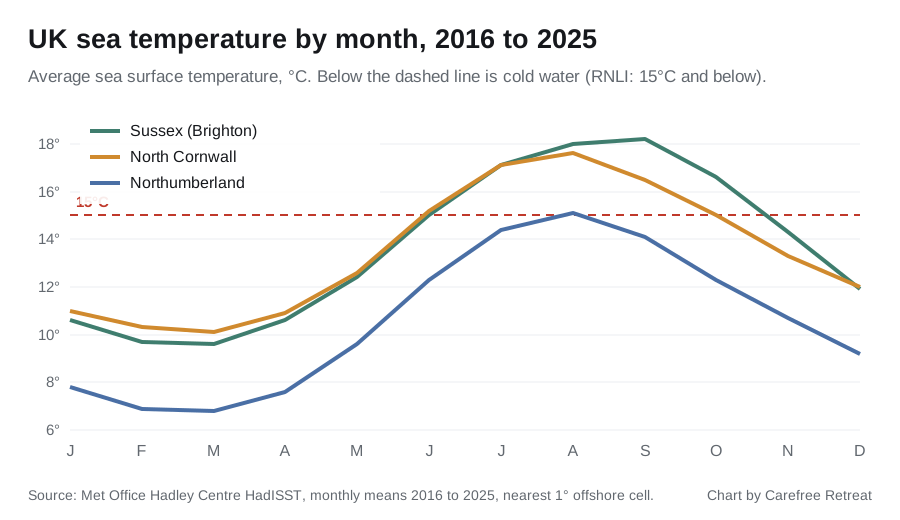
UK sea temperature by month follows the sun with a lag of about two months. The sea is coldest in February and March and warmest in August, and it holds its heat well into autumn. On every one of the nine coasts we checked, the sea in September averaged warmer than in June, often by more than a degree. Off Sussex, September is the warmest month of the year.
The figures below are ten-year averages, 2016 to 2025, from the Met Office Hadley Centre’s HadISST sea surface temperature record. We took the monthly value for the nearest one-degree ocean cell to each stretch of coast that retreat and spa guests head for, then averaged each calendar month across the decade. The red line that matters is 15°C: the RNLI defines anything at 15°C and below as cold water, the point at which cold water shock becomes a real risk.
Average sea temperature by month, nine UK coasts
Degrees Celsius, monthly average 2016 to 2025. Figures above 15°C are in bold.
| Coast | Jan | Feb | Mar | Apr | May | Jun | Jul | Aug | Sep | Oct | Nov | Dec |
|---|---|---|---|---|---|---|---|---|---|---|---|---|
| Sussex (Brighton) | 10.6 | 9.7 | 9.6 | 10.6 | 12.4 | 15.0 | 17.1 | 18.0 | 18.2 | 16.6 | 14.3 | 11.9 |
| North Cornwall (Newquay, St Ives) | 11.0 | 10.3 | 10.1 | 10.9 | 12.6 | 15.2 | 17.1 | 17.6 | 16.5 | 15.0 | 13.3 | 12.0 |
| South Devon (Torbay) | 10.8 | 10.1 | 9.9 | 10.8 | 12.4 | 14.8 | 16.7 | 17.4 | 16.8 | 15.5 | 13.8 | 12.1 |
| Pembrokeshire | 10.5 | 9.8 | 9.5 | 10.3 | 12.1 | 14.6 | 16.5 | 17.1 | 16.3 | 14.9 | 13.1 | 11.7 |
| North Norfolk | 8.1 | 7.1 | 7.2 | 8.4 | 10.9 | 14.0 | 16.2 | 17.5 | 16.7 | 14.4 | 11.8 | 9.7 |
| Cumbria coast | 9.4 | 8.3 | 8.1 | 9.1 | 11.0 | 13.2 | 15.0 | 16.0 | 15.8 | 14.5 | 12.6 | 10.7 |
| North Yorkshire (Scarborough, Whitby) | 7.9 | 7.0 | 6.9 | 7.8 | 9.9 | 12.9 | 15.0 | 15.9 | 14.8 | 12.7 | 10.9 | 9.2 |
| Northumberland | 7.8 | 6.9 | 6.8 | 7.6 | 9.6 | 12.3 | 14.4 | 15.1 | 14.1 | 12.3 | 10.7 | 9.2 |
| West Highlands (Oban, Mull) | 9.1 | 8.5 | 8.2 | 8.8 | 10.2 | 12.2 | 13.9 | 14.5 | 14.0 | 12.9 | 11.5 | 10.4 |
These are offshore averages. Shallow bays, estuaries and rock pools warm faster on a sunny afternoon and cool faster at night, so the water at the shoreline can be a couple of degrees either side of the figure in the table. Treat the table as a guide to the season, not a reading for a particular beach on a particular day.
What the table tells you
September is the swimmer’s month, not June. Off North Norfolk, June averages 14.0°C and September 16.7°C. Off Sussex the gap is 15.0°C against 18.2°C. The sea has had all summer to warm up by September, while in June it is still catching up after the winter. If you are booking a coastal retreat for the sea swimming, an early autumn break gets warmer water, and usually quieter beaches, than an early summer one.
The south and south west clear 15°C for four months. Sussex, South Devon and North Cornwall each average above 15°C for four months: July to October off Sussex and South Devon, June to September off North Cornwall. The Atlantic keeps Cornwall the warmest coast in winter: 10.1°C in March against 6.8°C off Northumberland.
The North East gets one month. Northumberland’s sea averages above 15°C only in August, and then only just, at 15.1°C. North Yorkshire is the same, with July and September sitting right on the line. For most of the year a swim there is a cold water swim.
The west of Scotland never clears 15°C on average. The waters off Oban and Mull peak at 14.5°C in August. They are milder than the North Sea in winter, but they never warm up as much in summer.
The North Sea swings hardest. North Norfolk runs from 7.1°C in February to 17.5°C in August, a range of more than ten degrees. The Atlantic-facing coasts move about seven. A shallow sea heats and cools faster than a deep ocean.
What 15°C means for a swim
The RNLI says the effect of entering water at 15°C and below is often underestimated, and that cold water shock can be the precursor to drowning. The first gasp and rapid breathing pass in less than a minute. Its advice if you fall in unexpectedly is to resist swimming straight away, float on your back until your breathing settles, then call for help or swim to safety.
In practice, that makes the months in the table below 15°C, which is most of the year on most coasts, the ones where you should:
- Get in slowly, not by jumping or diving.
- Swim with someone, and stay within your depth until your breathing is under control.
- Keep the first swims of the season short, and get warm quickly afterwards.
- Choose lifeguarded beaches in season, and check the forecast and tides.
If you are planning a retreat that pairs sea dips with a sauna, our sauna and cold plunge timer helps you plan the rounds. For a controlled cold plunge at home, the ice bath calculator works out how much ice gets a tub to a target temperature.
Picking a coast and a month
- Warmest overall: Sussex in August and September, or North Cornwall and South Devon from July to September.
- Best winter sea dipping for the least shock: North Cornwall, where the sea rarely drops below 10°C on average.
- For the hardy: the North East coast, where a January swim is in water below 8°C.
- Water quality matters as much as warmth. Check a beach’s latest rating in our guide to bathing water classifications, and see the Blue Flag beaches in England for the cleanest-rated sands. Monitoring and lifeguard cover follow the bathing season dates, 15 May to 30 September in England.
Frequently asked questions
What is the warmest month for the sea in the UK? August on most coasts, with September close behind. Off Sussex, September is the warmest month on average, at 18.2°C against 18.0°C in August over 2016 to 2025.
Is the sea warmer in June or September? September, on every coast in our table. Off North Norfolk, June averages 14.0°C and September 16.7°C. The sea takes all summer to warm up and holds its heat into autumn.
When is the UK sea coldest? February and March. Off Northumberland, March averages 6.8°C. Off North Cornwall, the warmest coast in winter, it averages 10.1°C.
What sea temperature is too cold to swim? There is no single cut-off, but the RNLI defines water at 15°C and below as cold water, where cold water shock is a risk. Even the south coast is at or below that for eight months of the year, and the North East for eleven.
Where is the warmest sea in the UK? In summer, the south coast: Sussex averages 18.0°C in August and 18.2°C in September. In winter, the Atlantic coasts of Cornwall and Devon stay warmest.
How accurate are these sea temperatures? They are ten-year monthly averages for the open sea nearest each coast, from the Met Office’s HadISST record. Shallow water near the beach can be warmer on a sunny day and colder after a cold night.
Sources
- Met Office Hadley Centre, HadISST 1.1 monthly sea surface temperature, accessed via NOAA’s ERDDAP data server on 5 October 2026. Our averages cover January 2016 to December 2025.
- RNLI, Cold water shock.
Found a place we’ve missed? Tell us about it.
Back to top